Great stuff from Russmo, as usual. Be sure to keep it in mind when reading Dr. Schansberg's article, below.

A month after the devastation of Hurricane Katrina, the debacle of the ineffective levees surrounding New Orleans, and the disappointment with the government's relief efforts, let's look back at the lessons we should have learned from this disaster.
The disaster was much more about the flood than the hurricane. Many people seem to be missing this point. The over-estimation of Hurricane Rita's predicted impact is one symptom. Another side-effect is that, relatively speaking, the damage wrought by Katrina outside of New Orleans was ignored by the media. When we think about the devastation of hurricanes, unfortunately, we're far more likely to remember flooded New Orleans than flattened coastal Mississippi.
The blame game never ends—and rarely takes a break. It was good to see the Democrats and Republicans wait, oh, a few hours before they started blaming each other. Instead of a dispassionate analysis of the debacle after the dust had settled, we were mostly left with partisan hacks throwing mud at each other almost as soon as they could grab a handful.
All levels of government bear some blame for the debacle. The federal government could have responded quicker and better. But state and local plans were woefully inadequate and their implementation was inept. Anyone who tries to ascribe blame to only one level of government is remarkably blind or politically motivated.
The federal government bore too much blame and is now trying to bear too much responsibility. Why do people expect the federal government to be the chief solution to an essentially state and local problem? The federal government is not especially competent; it's out of their jurisdiction; and it's not as if they don't have enough to do already! And not surprisingly, local officials want boatloads of federal taxpayer dollars while being given as much control as possible over how those resources will be spent.
Far too many people depend on government far too much. Let me get this straight: government failed at all levels—before, during, and after the disaster—so the solution is to get the government much more involved. Hmm…Moreover, for the last 40 years, the federal and state governments have been busy subsidizing bad decisions by individuals through public policy. The result: many people have been left unable to make decisions to promote their own well-being—or unwilling to do so, knowing that the government would probably bail them out. Natural disaster plus government ineptitude plus sin nature equals a debacle of biblical proportions.
Politicians really enjoy spending taxpayer money. President Bush has said that he wants to spend $200 billion post-Katrina and cut spending elsewhere so that overall spending does not increase. He might as well say he'd like to see cows fly. The few Republican fiscal conservatives in Congress have run with this charge by proposing 'Operation Offset"— a plan to reduce pork-barrel highway spending and to postpone the recently-passed prescription benefit for seniors. For their efforts, they have already been brow-beaten by the House leadership. And Bush has repeatedly shown that he has no stomach or backbone for fiscal discipline.
Your taxes will rise dramatically. Bush says that he is committed not to raise taxes. If so, this means an increase in the national debt—in other words, higher future taxes. At this point, Congress is now looking to spend $250 billion—over and above the amount that private insurance will pay in claims. This turns out to be more than $3,300 in taxes from the average family of four—and almost $200,000 per person in the New Orleans MSA before the flood. Honesty and candor would require a mention of the spending's impact on taxes. Unfortunately, another Category-5 hurricane is more likely.
D. Eric Schansberg
Professor of Economics
Indiana University (New Albany)
Adjunct Scholar, Indiana Policy
Review and the Acton Institute
Author, Turn Neither to the Right nor to the Left: A Thinking Christian's Guide to Politics and Public Policy
Fireplaces in club lounges. Pool tables in the quarterback suites. Wireless Internet access throughout. A little more room in the seat.
The nearly 500-page stadium plan released Monday details how nearly every inch of the new building will look and be used -- from the size of potted plants to the width of the seats.
I was just watching the groundbreaking ceremony for the new Downtown stadium and I heard Mayor Peterson thank a wide range of people for their support in getting this boondoggle. The only group the mayor forgot to thank was the long-suffering taxpayers of Marion County and now most of the surrounding counties.
We have funded facilities for professional sports teams and still have storm sewers that do not function, and our public safety professionals are in jeopardy of losing their jobs. We have given tax breaks to corporations who leave town without consequence while many homeowners are at risk of losing their property due to outrageous tax increases.
I would ask Mayor Peterson and the tax-and-spend Democrats and Republicans on the City-County Council to keep this in mind. The Libertarian Party of Marion County certainly will over the next two years.
Sam Goldstein
Vice Chair, Libertarian Party of Marion County
Indianapolis
But his stewardship of the people's money and his vision for the role of government in our lives have left me more than disappointed with his leadership of Congress and his direction of his own administration.Or, as Glenn McCoy's recent cartoon summed up...
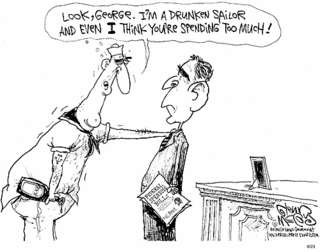 The Noblesville Daily Times ran the McCoy cartoon and the Garrison article on the Viewpoint page today. The drumbeat is growing. Per Buchanan, at World Net Daily:
The Taft-Goldwater-Reagan-Helms Republicans were prepared to pay the political price for saying "No." But just as the Democrats of the 1930s found the formula for permanent power in "tax and tax, spend and spend, elect and elect," as Harold Ickes Sr. put it, the Bush Republicans and Big Government conservatives of the 1990s believe they have found an even surer formula for permanent power: "Cut taxes, spend and spend, elect and elect."Per Novak, at Town Hall, discussing the treatment given Indiana's Mike Pence for daring to be a fiscal conservative:
Pence was far more discreet in Tuesday's session with his party's leadership, but that did not save him a going over, led by two powerful committee chairmen: Rep. Don Young (Transportation Committee) and Rep. Bill Thomas (Ways and Means
Committee). The harshest treatment of Pence, however, was administered by House Majority Leader Tom DeLay, who does not like his rank-and-file members depicting a free-spending Republican Party.
Even though Pence is correct, and it's absolutely true. It is incredible to think that President Bush has not used he veto power even once... until you recall and consider the formula identified by Buchanan above. Republican leaders like Tom DeLay don't want fiscal conservatives to be shown enough of the Goldwater-Reagan legacy to think carefully about it. They want fiscal conservatives to waste their votes on the GOP on the mere, fading memory of those legends, despite the reality of the spending actions of the Republican-led Congress.
Mona Charon, the American Conservative Union, Matt Towery, the Cato Institute... these aren't the liberals calling out the GOP. Five years of denial is enough for them.
The real question is: have you had enough? Isn't it enough that the GOP has ushered in more real liberalism than the Democrats could have? Isn't it enough that no Democrats had to be elected President, or gain control of Congress, in order to have their agenda so thoroughly advanced?
When you've had enough, and have decided that you are serious about smaller government, with lower spending, the only sane thing you can do is back Libertarian candidates (or become one), and vote Libertarian.
Estate tax is unjustified government intrusion into
inheritanceThe headline announcing Marian Wright Edelman's column on the estate tax, "Permanent repeal would hurt poorest", (Viewpoint, Noblesville Daily Times, Sept. 20) helps one understand the misguided economic thinking of the Left and the threat such "thought" poses to individual liberty and financial security.
Should the descendents of the person who has worked, planned, and saved for the purpose of providing for them be punished only because the offspring of the poor were not so cared for by their own? What message does the Left send in opposing estate transfers? It can only be that planning and thrift are to be discouraged at the penalty of theft, and that a lack of planning is to be encouraged and rewarded.
Your money was earned by you. It should be directed at your passing by you and you alone. The state should have no claim on the money you earned, merely because you pass away. Nor should the poor and their apologists, who would use the state as the means to steal what you earned. The well-to-do have not merely hit life's lottery. They have made the life choices that result in the creation of wealth. These choices should be encouraged by all public policy, including estate policy.
Edelman makes the assertion that working hard and saving for the purpose of ensuring a more secure future for your children and grandchildren somehow worsens another person's lot in life. In fact, the poor's lives are utterly unchanged by this action. It is absolutely true that the descendents of the person who worked, planned, and saved benefit enormously from such forethought. What makes that a bad thing? That such people will not be dependent upon the welfare state, and therefore, will have no need for the Left and their statist politicians?
Republicans should be at the fore in removing the immoral estate taxes from the books. Unfortunately, they are mired in a directionless muddle on all things economic and drifting ever leftward, moving away from their fiscal conservatism. We hear precious little from them on this subject.
Libertarians grasp these concepts completely, which is why Libertarians oppose all manner of estate taxes.
Mike Kole, Fishers
Kole is a Libertarian candidate for Indiana Secretary of State. He is the former chair of the Libertarian Party of Hamilton County.
Experts say gas prices could rocket above $4 a gallon, and oil refiners hope consumers won't worsen already-tight supplies by filling tanks like they did during Katrina, when demand shot up as much as five-fold at some locations, said Marathon Petroleum Co. spokeswoman Linda Casey.
Not since the Sept. 11, 2001, terrorist attacks had Casey seen such hoarding, she said.


Fred Peterson and myself stood at the corner for approximately 90 minutes. Fred's sign read "Sewers not Stadiums" and mine read "Cops not Colts". The first two reactions we got were negative. One guy wanted to debate why we were there, and another woman yelled sorry about your luck. After this the reactions were extremely positive including three passing police officers, one ambulance driver, and one water company driver giving us the thumbs up. I would say overall there were 35 to 40 thumbsup signs we received. We had three people ask why there weren't more protesters there including one woman who blocked traffic to do so.
We had our photograph taken by someone who worked for a couple of newspapers but would not say which ones. Had a reporter for the Louisville Courier Journal interview us also. Then we had a good conversation with the traffic control officer at the end, he too wondered why there were not more protesters but we found out the he too is a Libertarian and agreed with us wholeheartedly. I think Fred left disappointed because the local media ignored us, but I guess I'm used to it, so I have to say I think it was well worth the effort.Update: The Louisville Courier Journal ran an article on a stadium proposal in that city, with the telling headline, "Arena Favored, But Not Tax Paid". I think the sentiment was identical here in Central Indiana, which is why the County Councils voted on it and not the citizens. The Libertarian position is not anti-Colts or anti-stadium. The Libertarian position is private ventures should be privately funded, and, public health and safety are top priority- especially in times of budgetary distress.
Conspicuously missing from the post-Katrina spending debate is a question for some brave soul in Congress to ask, What is the appropriate and constitutional role here for the federal government? Before the New Deal taught us that the federal government is the solution to every malady, most congresses and presidents would have concluded that the federal government's role was minimal. One of our greatest presidents, Democrat Grover Cleveland, vetoed an appropriation for drought victims because there was no constitutional authority to spend for such purposes. Today he would be ridiculed by Ted Kennedy as "incompassionate."
We all want to see New Orleans rebuilt, but it does not follow that this requires more than $100 billion in federal aid. Chicago was burned to the ground in 1871; San Francisco was leveled by an earthquake in 1906; and in 1900 Galveston, Texas, was razed by a hurricane even more ferocious than Katrina. In each instance, these proud cities were rebuilt rapidly and to even greater glory--with hardly any federal money.
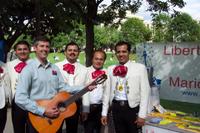 The Mariachi band insisted that I take their guitar. I protested that I really only know how to play a few chords, and barre chords. They enjoyed a good laugh.
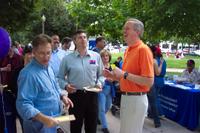 Indianapolis Mayor Bart Peterson stopped by our booth, and Sam Goldstein asked him to take the World's Smallest Political Quiz. The Mayor asked what would happen if he scored Libertarian. We told him he could bring in his $25 membership fee and attend Monday's meeting at Shapiro's. This prompted a huge round of laughs.
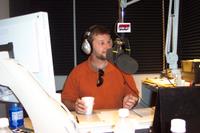
The second event was a radio appearance on WXNT. Guest host Andy Horning & I engaged listeners and callers in a great conversation about the role of the Libertarian Party, especially for fiscal conservative who aren't getting what they bargain for with the two older parties. 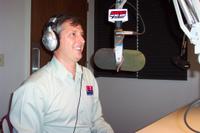
President Bush in his nationally televised speech Thursday night clearly was determined to prove he has empathy for the victims of Hurricane Katrina. Perhaps too determined.
But fiscal reality can't be ignored, and the federal deficit will soar beyond all reason without further thought about how to pay for the president's and the nation's generosity.
One cache of gold worth mining: The $286 billion highway bill that Congress approved in July. The president and Congress should insist on revisiting the legislation, packed with more than 6,300 pork-barrel projects worth $23 billion. Congress could, for example, save more than $430 million simply by canceling work on two bridges in Alaska that will serve few people and little purpose.
Back home in Indiana, Congress should tell the Indianapolis Children's Museum to no longer count on $12.5 million stuffed into the highway bill for building new loading docks and a visitors entrance. A tough loss for the museum? Sure. But it never made sense for the federal government to give a local museum money in the first place. That, and other federal handouts around the nation, can in no way be justified now in light of the massive and expensive emergency on the Gulf Coast.
All-day kindergarten's defenders say that its effects carry on long after the kids have turned the yarn tassels on their construction-paper mortar boards. American students'' standing among those of other countries has fallen behind, and we must do everything we can to put our kids back on top. That includes all-day kindergarten.
However, studies cited by the Goldwater Institute, Thomas Sowell and others suggest that any education advantage of all-day kindergarten disappears by middle school, even among so-called at-risk children. Besides, our nation's elementary students with only half-day kindergarten already compete on even footing with students of other nations. Our students stay near the top until middle school. Seeing as our nation's education shortcomings start in middle school, putting the burden on kindergarteners seems misdirected.
Indiana ethics rules prohibit state employees from engaging in political activity while on duty or acting in an official capacity.
The news release troubled Sheila Suess Kennedy, associate professor of law and public policy at the Indiana University School of Public and Environmental Affairs in Indianapolis.
"I don't know whether it is unethical, but I don't think it is appropriate," said Kennedy, a former Republican candidate for Congress and former director of the Indiana Civil Liberties Union.
My feelings about the terror attacks three years ago are as fresh as the day after. My palms still sweat when I think about it. When I saw the first images on TV, before the second Tower was struck, my mind was on the ground in Manhattan, where I had a dozen friends working and making their homes. I felt that sick choking feeling until I knew each of them was okay. Then I felt raging anger.
Even though the attacks weren't personal, I felt as though they were. My friends being in Manhattan was just part of it. The World Trade Center was a personal favorite of mine. I thrilled to the sight of them from any angle, but especially when viewed from atop the Empire State Building, or from the Statue of Liberty. I am a capitalist, and no place on earth defines capitalism better than Wall Street and southwestern Manhattan.
So, try as I might to like the proposed designs for the memorialized World Trade Center site, I still absolutely detest them. The memorials fail to memorialize what the Towers were about.They were selected for destruction by the terrorists for being symbols of capitalism. The Twin Towers were the defining skyscrapers in the defining skyline of the world's definitive financial center. To stand today at the Statue of Liberty and look across the River is to feel the void like a lost love as much as to see the void.
There was a lot of talk in the days following the attacks that the American people must not allow the terrorists win, that we must proceed in the spirit of that hated capitalist mantra, 'business as usual'. How right that common wisdom was.
Well, THE TERRORISTS HAVE WON. It isn't that they ended business as usual. Thankfully, that has resumed. But the premier symbol of capitalism is gone and won't be replaced.
I know that the primary focus of the memorials is those who lost their lives at the site. I have every interest in the world in seeing a fitting tribute paid to them. However, I would be sure to include the spirit that was attacked.
If I was in charge of the process, I would give the greatest tribute to those firefighters who ran up the stairs and to the people who perished while conducting business as usual. I would rebuild the Twin Towers IN EXACTLY THE SAME PLACES UPON WHICH THEY ONCE STOOD, with all dimensions exactly as before save one: the buildings would finish one story higher.
To let the terrorists know that they will not win, they must be given the symbolic 'up yours' that they gave to the American Spirit. Raising the Twin Towers for all to see is the greatest pair of raised middle fingers the haters of America would ever see.
THAT would be the greatest tribute to those who died in the World Trade Center attacks. No candles or mirrors or list of names will EVER come close to honoring them- or the American Spirit- as new Towers would.In contrast, observe the treatment given the Pentagon, the greatest symbol of the American military. While the scale of destruction visited that building was not nearly as total as that brought to the Twin Towers, what was damaged was repaired and fully operational without any hesitation or debate. Business as usual prevailed at the Pentagon.
It shows you symbolically what is sacred in our country (the military) and what is subject to demolition by group-think (capitalism).
